Laverne Cox

June is #PrideMonth. All month long we're celebrating Pride with our friends. This page is not just an ally, we are an accomplice. For Pride Month this year we're focusing less on "love who you want" and more on "queer and trans people are in danger". In the spirit of that vibe, we're choosing to highlight activists and events where the struggle for basic human and civil rights wasn't all rainbows (see what we did there) and sunshine.
Laverne Cox (b. 1972) was raised by a single mother and grandmother in Mobile, Alabama with her twin brother. Cox endured a childhood scarred by bullying, isolation, and anti-trans bigotry. In her memoir, she shares harrowing memories of childhood trauma, including a brief period of being left at an orphanage and a suicide attempt at age 11 due to the intense shame and harassment she faced for not conforming to gender norms. Despite this brutal environment, she developed an inner defiance, channeling her energy into creative writing and classical ballet to chart her own path forward.
Cox’s passion for the arts eventually led her to higher education, where she refined her skills and began her medical transition. She initially studied dance at Indiana University Bloomington before transferring to Marymount Manhattan College in New York City, where she shifted her focus from classical ballet to acting. During this formative period, she immersed herself in the New York City underground nightclub scene, frequently performing in drag shows to survive while auditioning for mainstream acting roles. These early years in the city allowed her to fully embrace her identity as a woman, building the grit and glamour that would define her future career.
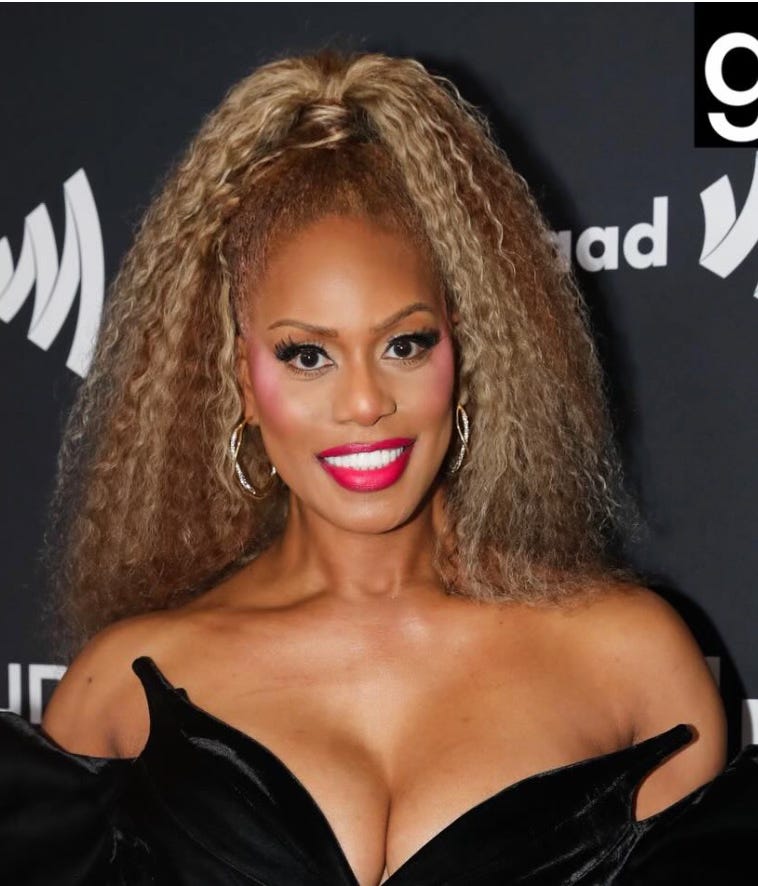
Her decades of perseverance culminated in a historic, meteoric breakthrough when she was cast as Sophia Burset on the hit Netflix series Orange Is the New Black. Her nuanced portrayal of an incarcerated transgender woman catapulted her into global stardom and broke structural barriers within Hollywood. In 2014, Cox became the first openly transgender person to be nominated for a Primetime Emmy Award in an acting category. She followed this milestone by becoming the first transgender person to win a Daytime Emmy as a producer in 2015, establishing herself as an industry pioneer and a vital ambassador for trans visibility on screen.
Cox uses her platform to emphasize that her financial and professional challenges are indicative of a much larger, coordinated political assault on the transgender community. She notes that if someone with her immense privilege and visibility is forced to dip into retirement savings to stay afloat, less-privileged trans individuals face catastrophic consequences. She views the current targeting of gender-affirming care and DEI frameworks as a dangerous “permission structure” to eliminate trans people from public life. By shedding her personal shame and sharing her story, Cox continues to champion collective resistance, fighting to ensure that future generations do not have their rights and humanity systematically stripped away.
Cox has recently shed light on the severe economic and systemic backlashes facing transgender individuals in America. In a series of recent interviews—most notably featured in The Guardian while promoting her new memoir, Transcendent—Cox revealed she has lost 90% of her income over the past two years. She explicitly attributes this staggering financial drop to the Trump administration’s aggressive rollbacks of Diversity, Equity, and Inclusion (DEI) initiatives. This crackdown has effectively dried up her corporate speaking engagements, brand sponsorships, and academic teaching gigs.
https://www.womenshistory.org/education-resources/biographies/laverne-cox
https://en.wikipedia.org/wiki/Laverne_Cox
https://www.nytimes.com/2026/06/10/books/review/laverne-cox-transcendent-memoir.html
Thank you for the story. Sad to see how the current administrations politics hurt transpersons at every level. One thing is income, but also not being given the opportunity to teach about what is happening is a problem. People need to be able to listen and learn.